How a Walk-Through Sorts Which Trees Come Down Now and Which Can Wait
Most properties hold a mix of urgent trees, borderline trees and perfectly healthy ones, and telling them apart is the whole job.
October 16, 2026 · 4 min read
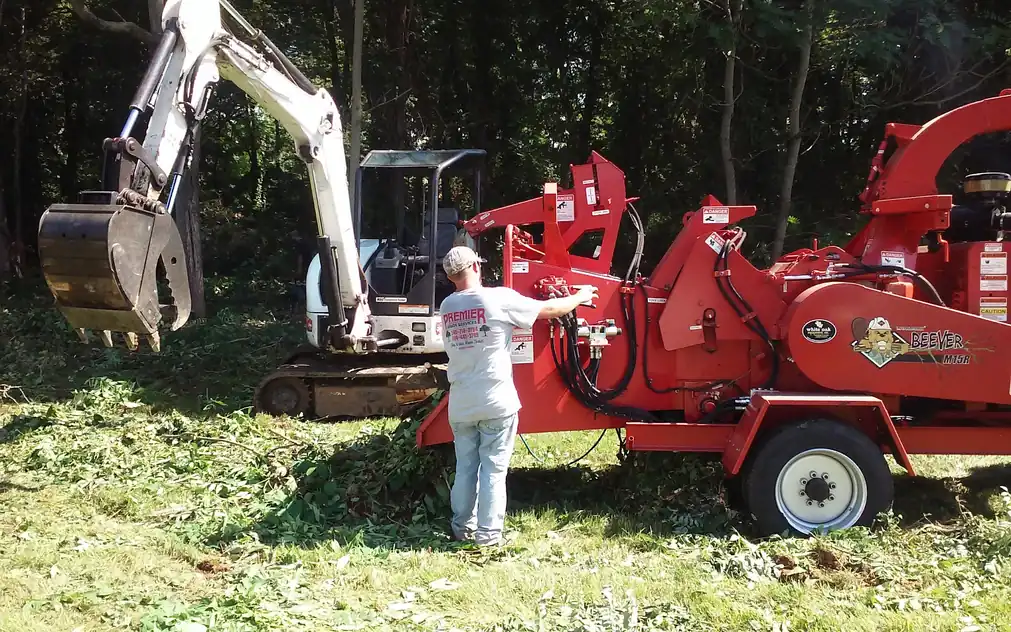
Most people call a tree service about one tree: the one that dropped a limb on the shed, or the one that leans a little further every spring. The trouble is that a property with thirty trees, or three hundred, rarely has only one tree worth asking about. A good walk-through looks at all of them and sorts them into three groups: take it down now, it can wait a few years, and leave it alone because it's healthy.
A homeowner at Lake Anna described exactly that kind of visit in a Google review of Premier Arbor Services. Scott Bouldin wrote: “We had him walk around with us on our property at Lake Anna to examine all of our trees. Scott was very knowledgeable on the different tree species and pointed out the ones that needed to be taken down right away, ones that could wait a few years and the ones that were completely healthy.” That sorting is the real value of having someone who knows trees look at your land, so here's how it works and what puts a tree in each group.
Group one: trees that should come down now
Some trees are past the point of saving, or past the point of leaving where they stand. The giveaway is usually structural. A dead tree gets more brittle every season, and dead hardwood can shed limbs on a perfectly calm day. A deep crack running up the trunk, or a split where two trunks join, means the wood is already failing along that line. A lean is harder to read, because plenty of healthy trees have always leaned a bit. The one to worry about is a tree that has started leaning, especially when the soil on the opposite side has heaved up or cracked.
- No leaves in the middle of summer while the trees around it are fully leafed out
- A deep vertical crack, or a split where two stems meet
- A new or worsening lean, with soil mounded or cracked on the far side (a lifted root plate)
- Mushrooms or shelf fungus growing at the base of the trunk or on the roots
- Large dead limbs in the upper canopy, or a crown that's thin and bare at the top
- Any of the above on a tree tall enough to reach the house, the driveway, a fence or a power line
That last item matters more than people expect. The same defect carries very different urgency depending on what's underneath. A dead oak at the back corner of an acre is a wildlife snag. The same oak a few feet off the roofline is a problem you shouldn't wait on.
Group two: trees that can wait a few years
Not every problem tree is an emergency, and not every one needs a chainsaw this month. A hardwood with an old wound that has healed over, a tree with dieback in a single limb, a pine crowded by its neighbors and slowly losing its lower branches: these get a note, not a removal. Sometimes taking out one dead limb buys the tree years.
This middle group is where an honest walk-through saves money. You shouldn't pay to remove a tree that's only a maybe, and you shouldn't ignore one that's heading toward group one. The practical answer is to mark these trees, look at them again next spring, and look again after the big summer storms. Virginia's Piedmont gets plenty of thunderstorms with strong straight-line wind, and a borderline tree often shows its hand after one.
Group three: leave it, it's healthy
The third group is the one people forget to ask about. Healthy mature trees shade the house, hold soil on a slope, and take decades to replace. A sound oak or hickory does more for a lot than anything you could plant to replace it. A walk-through that ends with “that one's fine, leave it” is doing its job, and an owner who tells you so, even when it means less work for his crew, is worth listening to.
Why wet ground changes the math
Central Virginia's red clay holds water, and a tree standing in saturated soil has less grip on the ground than the same tree in dry soil. After a week of heavy rain, a tree with a compromised root system or a lean is much more likely to go over. If a tree is already on your watch list, a wet spring or a tropical-storm remnant is the time to have it looked at, not the time to find out.
What the visit looks like
Walk your property with the person doing the estimate. Look up into the canopy, look at the base of each trunk, and look at the ground around the roots. Mention anything you've noticed over the years, like a limb that dropped or a tree that looks different from last season. Premier Arbor Services is owner-operated, with Scott Keen bringing more than 20 years of arbor experience to the job, and Scott is on each and every job the entire time. The person judging your trees is the same person who takes them down.
If you've got a tree you're not sure about, or a whole property of them, call (540) 718-3794 and ask for a free estimate. Premier is open 24 hours a day, seven days a week, and if a call gets missed it's returned within 24 hours.
Premier Arbor Services LLC, (540) 718-3794
Call (540) 718-3794More articles
Clearing Acreage Without Losing the Trees Worth Keeping
The best cleared lots are the ones where the right trees were chosen before any equipment moved.
What to Expect When a Tree Stump Gets Ground Down
Grinding is quick and tidy, but it leaves chips and a hole, and it helps to know that before the machine shows up.