Clearing Acreage Without Losing the Trees Worth Keeping
The best cleared lots are the ones where the right trees were chosen before any equipment moved.
October 16, 2026 · 4 min read
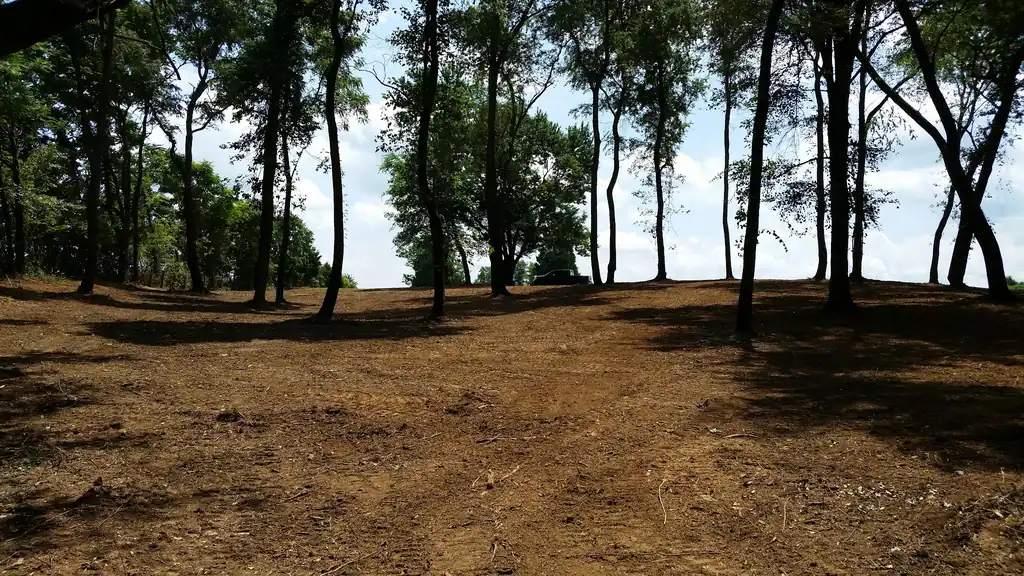
A cleared lot with a few tall hardwoods left standing looks like a place someone wants to live. A lot scraped flat to bare dirt looks like a construction site for years afterward. Both started out as wooded acreage, and the difference came down to what happened before the first machine moved: someone decided which trees were staying and then protected them.
Premier Arbor Services clears lots for new construction and for people who need existing property cleaned up. The work usually involves tree and brush removal, stump removal, lot grading and excavating. This post covers how to keep the good trees through all of that.
Start by walking it and marking what stays
Before any clearing, the useful first step is a walk through the whole parcel with the person who'll run the equipment. You mark the keepers and you mark the trees that are going, and you talk about why. A keeper is usually healthy, structurally sound, a good species for the spot, and far enough from where the house, driveway and septic area will go. Dead, leaning or storm-damaged trees near a keeper often come out too, since the clearing that protects one tree shouldn't leave a hazard standing beside it.
- Where the house pad, driveway and utilities will actually run
- Which healthy trees give shade or a view to the finished house
- Which trees are already dead, cracked or leaning and shouldn't be saved
- Where the equipment and dump trucks will enter and travel
- Where cleared brush gets chipped or hauled out
Roots are the part nobody sees
Most of a tree's feeding roots sit in the top foot or two of soil, and they reach well past the spread of the branches. That's the part heavy equipment damages. A loaded dump truck driving over the root zone packs the soil down so water and air can't get in. A foot of fill piled around the base smothers roots that were breathing fine last month. A trench cut for a drain line slices through them. The tree often looks fine for a year or two and then starts dropping leaves early, thinning at the top, and dying back.
The protective rule is simple even if it's easy to forget on a busy site: keep the machines, the stockpiles and the fill outside the root zone, and make that zone at least as wide as the branch spread. Wider is better. If equipment has to pass near a keeper, plan a route that crosses as little of that ground as possible and agree on it beforehand.
Grading around the trees you're keeping
Grading is where good intentions often go wrong. Lowering the soil around a tree cuts its roots, and raising it buries them. The best approach is to leave the ground at the base of every keeper as it was and shape the new grade out beyond the root zone, so water moves away from the house and around the tree instead of pooling at the trunk. On a wooded lot with Virginia's clay soil, that matters even more, because clay holds water and tree roots in constantly wet ground struggle.
One more thing to think through: a tree that spent its life inside a stand of woods is used to being sheltered. Clear the trees around it and it suddenly takes the full force of the wind. Some handle it fine. Others, especially tall, thin ones with small crowns, are the ones that come down in the first summer storm. A walk-through should pick keepers that look like they'll stand on their own, and favor the sturdy ones with full crowns and strong trunks.
What the clearing itself involves
Once the keepers are marked, the rest is straightforward heavy work. Trees come down, brush gets chipped (Premier runs a Morbark Beever M15R chipper) or hauled, and stumps are ground or pulled. Then the ground gets graded and, where the plans call for it, excavated for the foundation, the driveway or drainage. Premier's equipment includes a Kubota excavator, a Takeuchi track loader and dump trucks, so one company can handle the sequence from standing woods to a build-ready lot instead of coordinating three crews.
A testimonial on Premier's own website, from Matt DiCerbo of Glen Allen, Virginia, puts the goal in plain terms: “He cleared a third of the acre lot in Glen Allen, VA, and left the land in perfect condition.”
If you're clearing around an existing house
The same thinking applies when you already live on the property. Ask how the crew will get equipment in without tearing up the lawn, what route they'll take around your septic area and any buried lines, and whether the clean-up includes smoothing out the ground afterward. Premier's other jobs are owner-supervised too: Scott Keen is on each and every job the entire time, so you're talking to the person who's making those calls on your land.
If you have a parcel to clear, call (540) 718-3794 and ask for a free estimate. Premier serves Locust Grove, Orange, Bumpass, Spotsylvania, Fredericksburg, Lake Anna, Lake of the Woods, Stafford and the surrounding Piedmont. Tell Scott which trees you're already hoping to keep.
Premier Arbor Services LLC, (540) 718-3794
Call (540) 718-3794More articles
How a Walk-Through Sorts Which Trees Come Down Now and Which Can Wait
Most properties hold a mix of urgent trees, borderline trees and perfectly healthy ones, and telling them apart is the whole job.
What to Expect When a Tree Stump Gets Ground Down
Grinding is quick and tidy, but it leaves chips and a hole, and it helps to know that before the machine shows up.