What to Expect When a Tree Stump Gets Ground Down
Grinding is quick and tidy, but it leaves chips and a hole, and it helps to know that before the machine shows up.
October 16, 2026 · 4 min read
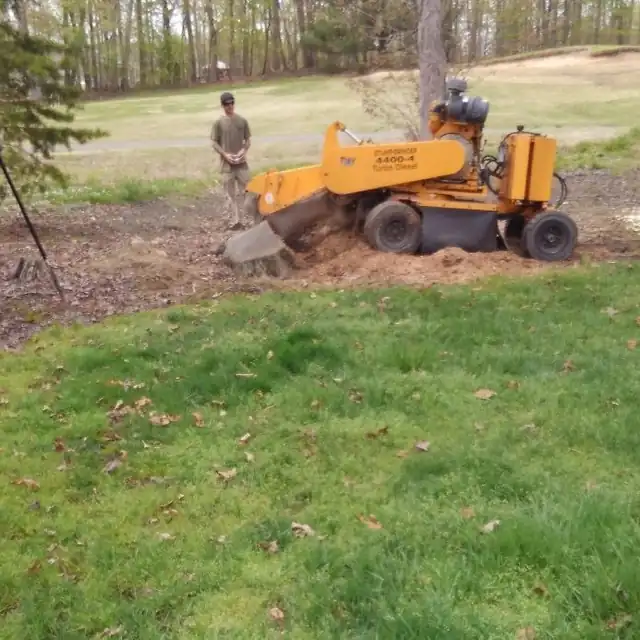
A tree comes down in an afternoon, and then you're left looking at a stump that will sit there for years. It trips the mower, collects mulch and dares everyone to move it. There are two real ways to deal with it, grinding and full removal, and they leave your yard in different shape.
How a stump grinder works
A stump grinder has a spinning wheel with carbide teeth on the end of a swinging arm. The operator sweeps the wheel back and forth across the stump, lowering it a little with each pass, and the teeth chew the wood into chips. Most grinding goes a good bit below ground level, so you can put soil and grass over the spot. Premier Arbor Services uses a stump grinder for this, and their stump grinding page also lists stump removal, lot clearing and lot grading as part of the same work.
The whole machine is much smaller than an excavator, which matters in a backyard. It can often get through a gate and stay clear of fences, patios and septic lids that a bigger machine wouldn't.
What it leaves behind
Grinding makes a pile. Every inch of stump the wheel eats becomes wood chips, and the chips pile up in and around the hole. The usual choices are to rake them out and haul them off, or to spread some as mulch in a planting bed. One caution is to keep them out of the soil you plan to grow grass in, because fresh wood chips tie up nitrogen as they break down. The cleaner approach is to remove most of the chips and fill the remaining hole with topsoil.
- A mound of wood chips on and around the former stump
- A shallow depression where the stump used to be
- Lateral roots that continue out from the stump below the grind depth
- Some fine sawdust spray on nearby grass, beds and walls
A grinder takes the stump and the top of the root flare. The larger roots that run outward underneath mostly stay put, and they decay over the years. For almost every yard use, that's fine. You can mow over the area, lay sod, plant grass seed or set a bed. If you plan to put a new tree in the same spot, plant a few feet to one side so the roots have undisturbed soil to start in. Some species also send up sprouts from the stump or the roots after cutting, so watch for those and cut them back.
Grinding versus full removal
Full stump removal means an excavator or loader pulls the stump and much of the root ball out of the ground. It leaves a much bigger hole and more disturbed soil, and it takes more fill to finish. It's the right call when you need the ground clear for something solid, like a foundation, a footing, a driveway or a drain line. If you only want a flat lawn, grinding does the job with a lot less disruption.
Premier lists both: grinding and stump removal. That's useful because it means the choice is based on what you plan to do with the ground, not on which machine the company happens to own.
Why the same visit saves you a second trip
Stump work is cheapest in effort when it's tied to the tree removal. The crew is already on site, the chipper and trucks are already there, and the grinder is parked a few steps from the work. Scheduling the stumps a month later means a second visit, a second set of ruts across the lawn and a second cleanup. Scott Bouldin's review of Premier at Lake Anna shows how it looks when it's handled together: “Scott and his crew took down four trees and ground down the stumps. He was able to leave behind the pieces that we could use for Firewood.”
Before the grinder arrives and after it leaves
Stumps often sit near things you can't see. Before anyone grinds, tell the crew about irrigation lines, invisible dog fence wires, buried electric to a shed or lamp post and any septic components. If you aren't sure what's down there, have buried utility lines located first (811 is the national call-before-you-dig number). Also move the patio furniture, kids' toys and anything else within a few yards, because a grinder throws chips and the occasional small stone.
Once the chips are cleared, back-fill the hole with topsoil in layers, tamp lightly, and expect it to settle as the buried wood decays. Top it off a few weeks later if it sinks. Then seed or lay sod. In a bed, a layer of mulch is plenty. If the spot is where you want something new to go in, plant it nearby and let the old roots finish breaking down.
If you've got one stump or a whole lot of them, call Premier Arbor Services at (540) 718-3794 for a free estimate. Scott Keen is on each and every job the entire time, and if a call is missed it's returned within 24 hours.
Premier Arbor Services LLC, (540) 718-3794
Call (540) 718-3794More articles
How a Walk-Through Sorts Which Trees Come Down Now and Which Can Wait
Most properties hold a mix of urgent trees, borderline trees and perfectly healthy ones, and telling them apart is the whole job.
Clearing Acreage Without Losing the Trees Worth Keeping
The best cleared lots are the ones where the right trees were chosen before any equipment moved.